
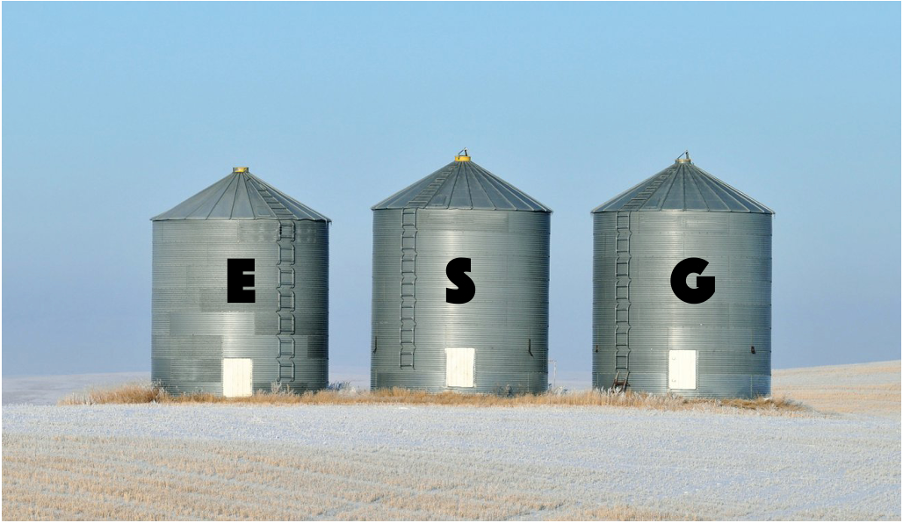

This week we have been reflecting on an uncomfortable truth – the world of sustainability is blurry and connected in complex and nuanced ways, and companies which are trying to adapt to the requirements of sustainability are not.
Everywhere we turn we are being reminded that all aspects of sustainability are interconnected and interdependent. A recent research debrief highlighted how even mainstream consumers see the link between what’s good for the planet, what’s good for society and what’s good for their own personal wellbeing. This may not be a new insight, but it does make you realise that companies who tackle the “E” and the “S” of ESG separately really are missing a trick.
Big companies prefer rigid, distinct structures, non-overlapping teams, functional boundaries and clearly scoped projects, because this approach typically drives efficiency and is easy to manage. However, in sustainability, it does the opposite – it drives inefficiency and leads to missed opportunities because different teams are working on environmental impact versus social impacts. Take biodiversity or regenerative agriculture – behind these two buzzwords sits the complex relationship between the environment and people: natural ecosystems and their link to social issues such as access to resources, social equity and inclusion. Assigning something like this to a team tasked with reducing impact on the “E” alone may overlook the social and community angle entirely. A bigger, better solution would come from a multi-functional, landscape approach that takes a more holistic view of sustainability and the interaction between E and S.
In other words, the more efficient and effective way to tackle sustainability challenges requires organisations to connect the dots in the same way that consumers are starting to. Could it be that the more siloed a business system looks, the less likely it is to succeed?
In this week’s news
- BlackRock lose $8.5bn deal due to “dominant and persistent leadership in the ESG movement”
- KLM get pinged for greenwashing
- French government take on fast fashion
Nick Pye
Co-Founder
Mangrove