


A great insight this week from Georgina Curtis on why sustainable substitutes are struggling – and it got us thinking about the bigger picture.
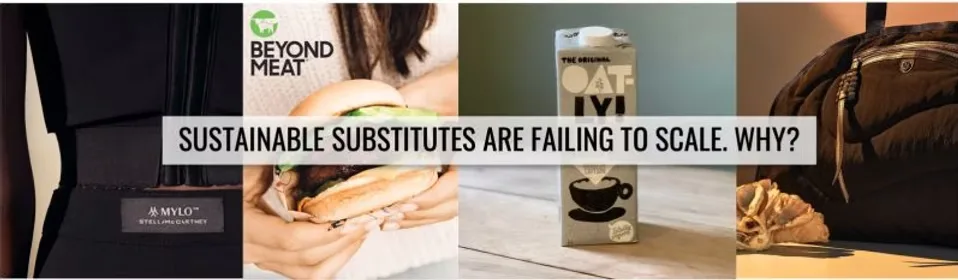
Last week Bolt Threads announced a “pause” on production of its mycelium-based leather, Mylo – originally backed by Stella McCartney, Adidas, Lululemon and Kering. This is really sad news, as we loved both the idea and the consortium approach. But is it part of a bigger trend? In recent months we have seen:
- Beyond Meat’s stock reach a record low (down 92%), still suffering from net margins of -65%. This company was once valued at over $13bn – about the same size as Rolls Royce.
- Oatly, the plant-based milk brand, also once valued at $13bn, struggling with losses of $59.3m and a valuation of just over $1bn.
- Investment in vertical farming drop massively – down from $1bn in the previous year to just $100m – bankrupting the likes of AeroFarms, which was valued at $1.2bn only a couple of years ago.
These sustainable substitutes are, arguably, better for the planet and promote a more positive future – so why are they struggling? Inflationary pressures driving up costs and prices have taken much of the blame, but we think there is more to it.
Many businesses and brands are moving well ahead of mainstream consumers and are being enjoyed only by those who genuinely believe in sustainability and put their money where their mouth is. The issue is that this group of consumers is small. Whilst mainstream consumers care about sustainability, they are yet to change their purchase behaviours.
Valuations such as those above are based on sustainable substitutes reaching the mainstream market – but many businesses have failed to achieve this and cross the chasm (for fans of Geoffrey Moore). Sustainable substitutes are typically things that most consumers aren’t asking for, especially when they are more expensive in a cost-of-living crisis, not discernibly better, and relay a confusing message as to why consumers should buy them. Getting the proposition right is the challenge we all need to address.
We are optimistic about businesses and brands crossing the chasm. And if there is one thing to learn from technology, it is that change in consumer behaviour will come when we offer consumers what they want and need – and that, at scale, will deliver both positive change and real business benefits.
Nick Pye
Co-Founder
Mangrove